
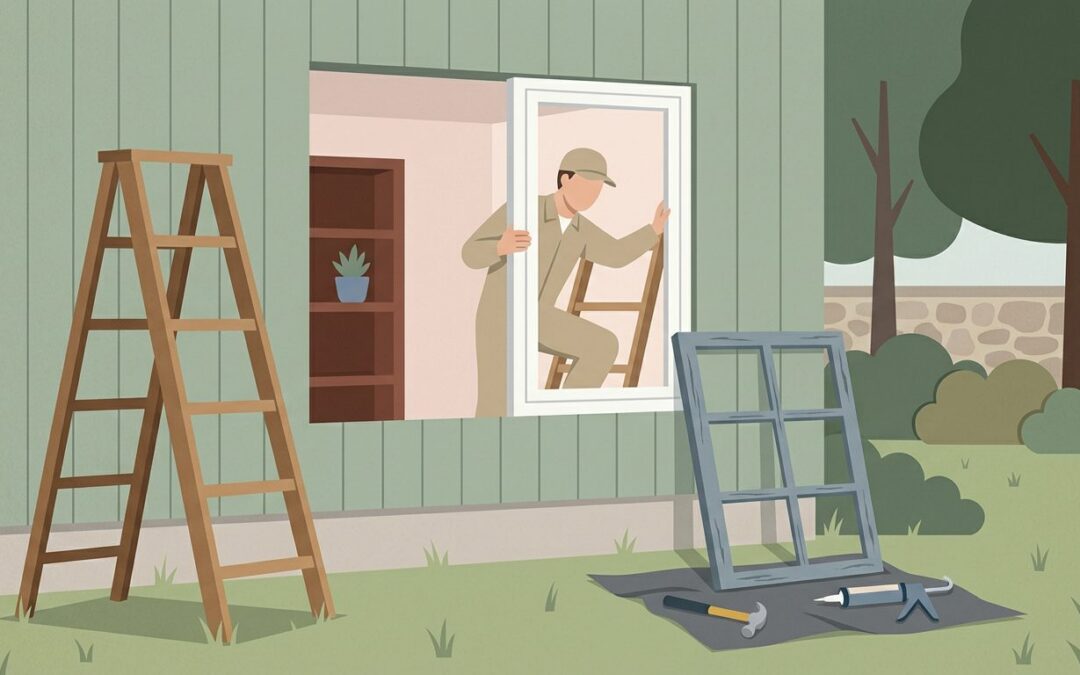
The total depends on how many windows you replace, their size and style, the frame material, the glass, and what the installer finds around the old frames. Windows are priced one at a time and added up, so the only reliable number comes from someone measuring your actual openings. Below is what moves that number and how to compare quotes fairly.
Why there is no single price
Two houses with ten windows each can end up far apart in cost. One has standard double-hung windows in sound frames. The other has large picture windows, a bay, and rot under two sills.
A window is a product and a job at once. The product is the unit itself. The job is taking out the old one, preparing the opening, setting the new one level, sealing it and finishing the trim. Both parts change the price.
What moves the price
Number of windows
More windows means a bigger total, but it often lowers the cost per window. Crew setup, delivery and cleanup are spread across the job. If you plan to replace all the windows in time, doing them together is worth pricing against doing them in stages.
Size and style
A small fixed window costs less than a large one that opens. Here are the common styles, from simplest to most involved.
- Single-hung and double-hung windows are the most common in older Westchester homes and are usually the easiest to fit.
- Casement windows crank open and seal tightly, but have more hardware.
- Sliders suit wide, low openings.
- Picture windows do not open and are usually the least complicated of the large units.
- Bay and bow windows are assemblies of several units and take more labor and support.
Odd shapes, arched tops and very large openings are usually made to order. That adds cost and time.
Frame material
Common choices are wood, vinyl, aluminum, fiberglass and composite. Each one trades price, upkeep and looks.
- Vinyl usually costs less and needs little maintenance.
- Wood has a traditional look and takes the most care over the years.
- Fiberglass and composite are stiff and stable, and generally cost more than vinyl.
- Aluminum is slim and strong, and is more often seen on commercial buildings.
Glass and energy features
Double-pane glass is common. Triple-pane, low-E coatings and gas fills can improve energy efficiency, and they add to the price of each unit. These upgrades pay off most on windows that face the weather, in rooms that are hard to heat or cool.
Glass can also cut street noise and add some security. If either matters to you, say so when you get quotes.
Condition of the opening
This is the part people miss. When the old window comes out, the installer sees the frame, sill and wall around it for the first time. Water damage or rot may need repair before the new unit goes in.
A good quote tells you how this will be handled. Ask whether repair work is included, priced separately, or billed after the fact.
Trim, hardware and finish
Interior and exterior trim, new locks and handles, and paint or stain all count. Some quotes include them and some do not. Compare what is listed, not just the bottom line.
Access and the type of house
A first-floor window with clear access is quicker than a third-floor one that needs staging. Older houses with unusual openings take more fitting. Siding or brick around the window can also change how the job is done.
Full replacement or insert replacement
An insert (pocket) replacement fits a new window inside the existing frame. It leaves the trim alone and is often quicker. It works only if the old frame is square and sound.
A full-frame replacement removes everything down to the rough opening. It costs more, but it lets the installer fix rot, add insulation and flash the opening properly. If you have seen water stains or soft wood near a window, full-frame is usually the better path.
Ask any installer which method they plan to use for each window and why. The answer tells you a lot about the quote.
How to compare quotes
- Get the same scope from each company. Same number of windows, same style, same material and glass.
- Check that removal and disposal of the old windows are included.
- Ask how rot or water damage is handled and priced.
- Confirm what is included for trim, caulking, insulation and interior finish.
- Ask about cleanup at the end of each day and at the end of the job.
- Confirm the contractor is licensed and insured for your county.
- Ask what warranty comes with the windows and with the labor.
The lowest number is not always the lowest cost. A quote that leaves out trim or repairs can end up higher once those are added.
When windows are worth replacing
Replace windows when they are hard to open or close, when you feel drafts, when the glass fogs between the panes, or when frames are rotting or warped. Replacing them can also help with noise and security. Windows that only look dated may need nothing more than repair or paint.
If you are planning other exterior work, think about timing. Windows, siding and roofing all work together to keep water out. Doing them in a sensible order can save repeat work on the same walls. For related costs, see our posts on what it costs to replace a roof and what it costs to replace vinyl or wood siding.
Questions people ask
Is it cheaper to replace all windows at once?
Often the cost per window comes down when the crew does many in one visit. It also gives you matching windows across the house. If the budget is tight, you can still start with the worst ones.
Do I need to replace the frames too?
Not always. If the frames are square, dry and solid, new units can often go into them. If there is rot or water damage, the frames and the opening need repair first.
Why do quotes for the same windows differ so much?
Usually the scope is different. One quote may include trim, disposal and repairs, and another may not. Material, glass options and the installation method also change the price.
Can I get a price without someone coming to the house?
You can get a rough idea, but the real price needs measurements and a look at the existing frames. That is why an on-site visit matters.
How we help with window replacement
New York Remodeling Corp. installs and replaces windows and doors for homeowners and some businesses in Westchester and Putnam County, from our base in Yorktown Heights. Our process starts with measuring and checking your existing windows and doors for structural concerns.
You can choose from wood, vinyl, aluminum, fiberglass or composite. We remove the old units carefully, inspect the area for water damage or rot, and make repairs before installing. Then we fit and secure the new units, seal and insulate around them, install hardware and finishing touches, and clean up after a final inspection. You can read more about our window and door installation services.
We are licensed and insured in Westchester and Putnam County (WC-10806 and PC-50028). Quotes are no-cost. Call (914) 248-5640 or send a message, and we will set up a time to look at your windows.


